The Center for Human-AI Innovation in Society

Consensus Beats Google Scholar in Education Leadership Pilot Study

An Interview with Dr. Seth Hunter
Associate Professor of Education Leadership at George Mason University
The article first appeared on https://consensus.app/ on September 4th, 2025

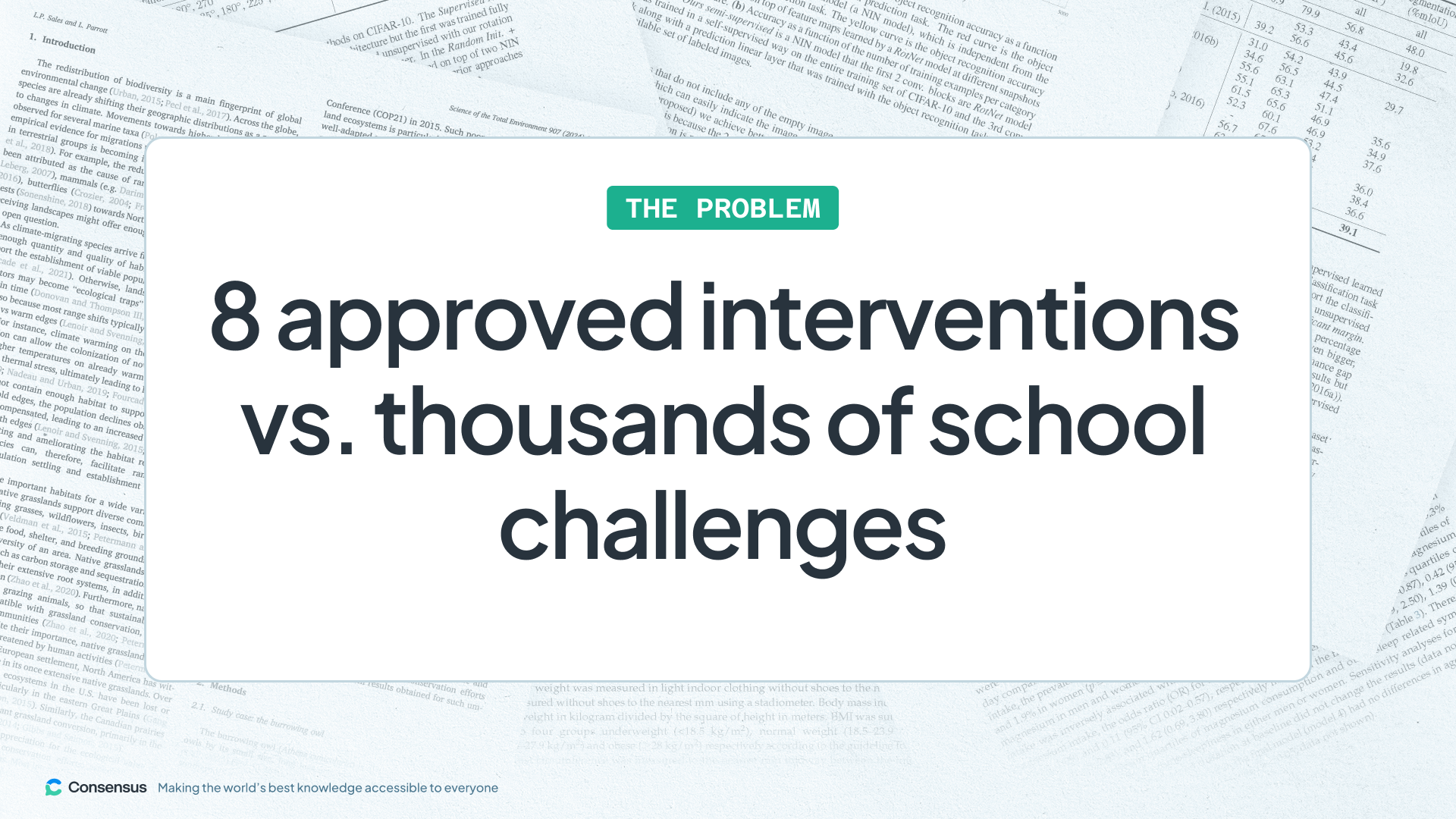
Federal law requires schools to use evidence-based interventions, but only 8 are officially approved for thousands of challenges. A pilot study run by Dr. Seth Hunter found that aspiring principals using Consensus were statistically significantly more likely to find research useful and easy to use compared to traditional methods like Google Scholar; suggesting AI could finally bridge the gap between academic research and school practice.

The Evidence Gap

Every year, thousands of education studies are published with the potential to improve schools. Yet principals and policymakers rarely use this evidence. Without tools or training to find and interpret research, they rely on generic interventions that check compliance boxes but don’t help students. Progress stalls, and children miss out on solutions that could change their lives.
The Scale of the Gap is Staggering

Since 2002, when the No Child Left Behind Act took effect, federal law has required underperforming schools to use “evidence-based” interventions backed by rigorous, peer-reviewed research. Yet in practice, only eight interventions have cleared federal review and are readily accessible to school leaders, leaving them with far too few options for the thousands of challenges they face. With so few choices, principals often pick from the list simply to stay in compliance, not because the options match their schools’ needs.

Take declining student attendance. Schools send automated text reminders to parents when the real issue might be bullying that requires counseling. Math score declines trigger sweeping reforms when the actual problem is vocabulary gaps affecting specific student groups. The intervention fails, but compliance boxes get checked.


Testing Consensus as a Bridge

Hunter wondered if AI could break this cycle.

To find out, he designed a pilot study with 40 aspiring principals in Mason’s Education Leadership MEd program, randomly assigning half to use an AI-enabled workflow built around Consensus, while the control group relied on traditional methods like Google Scholar and federal repositories. Hunter chose Consensus because it addressed two critical problems: its filters help surface rigorous studies that meet federal requirements, and its clear summaries make intimidating academic articles accessible to busy school leaders.
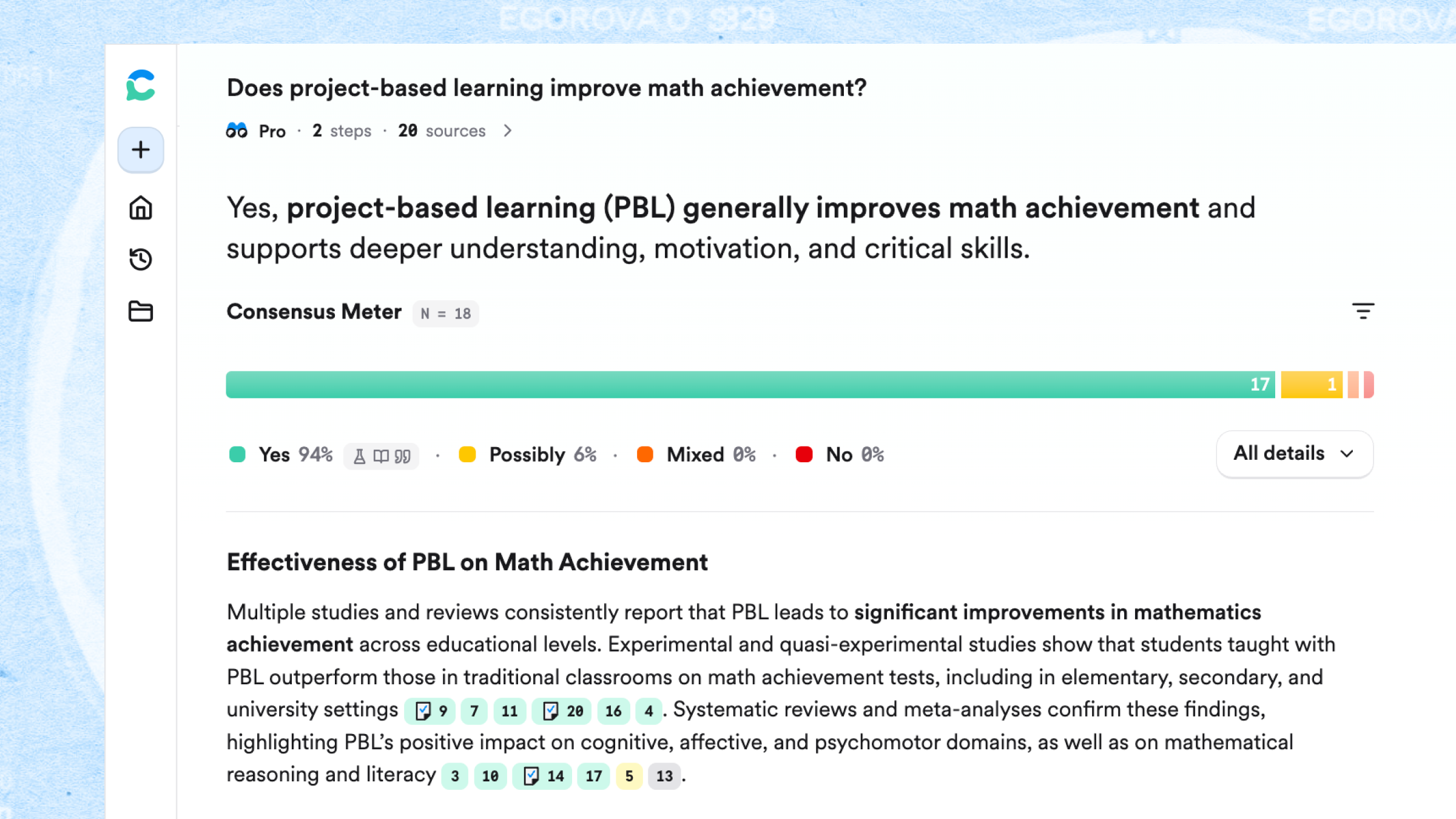
 

Product shot of results on consensus.app

Transformative Results

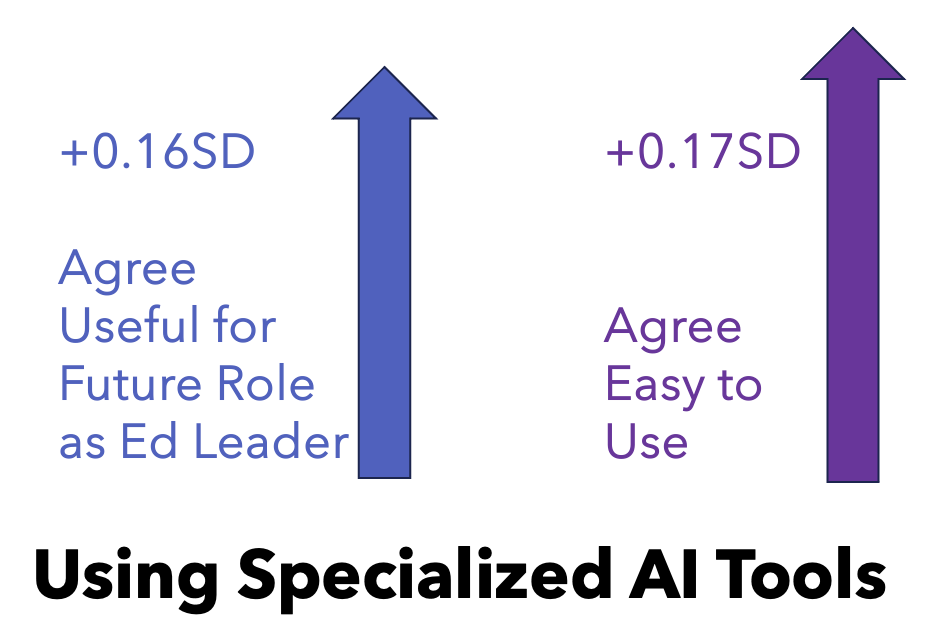
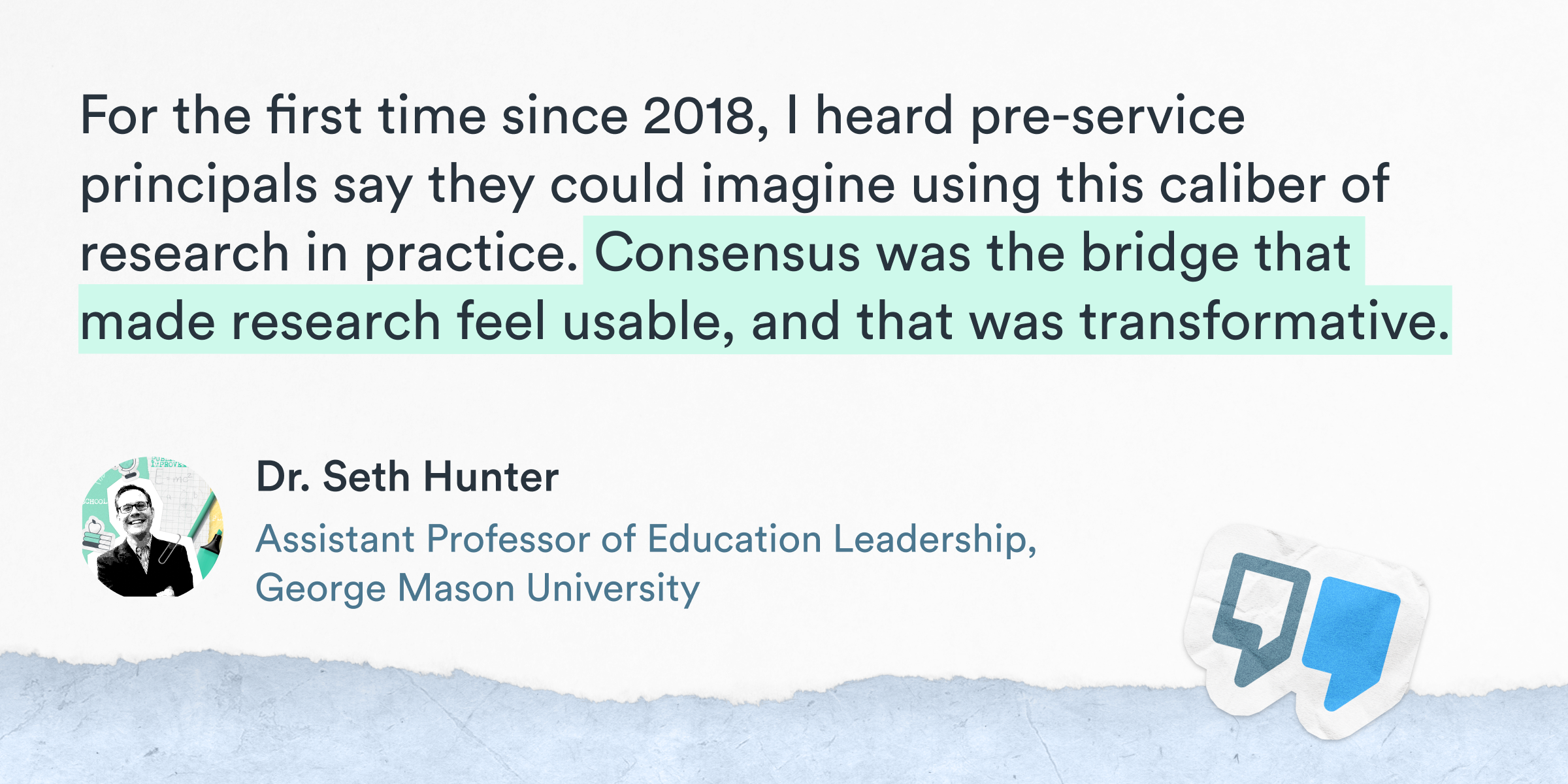
The results were striking. Students using the Consensus-based workflow said it was significantly easier to find and understand rigorous research. On surveys, they were statistically significantly more likely to agree the tools would be useful in their future roles as education leaders and that the tools were easy to use (effect sizes +0.16 and +0.17 SD, respectively). Even more importantly, for the first time since 2018, Hunter’s pre-service principals told him they could see themselves applying this caliber of research in schools. For him, that was a breakthrough.
 

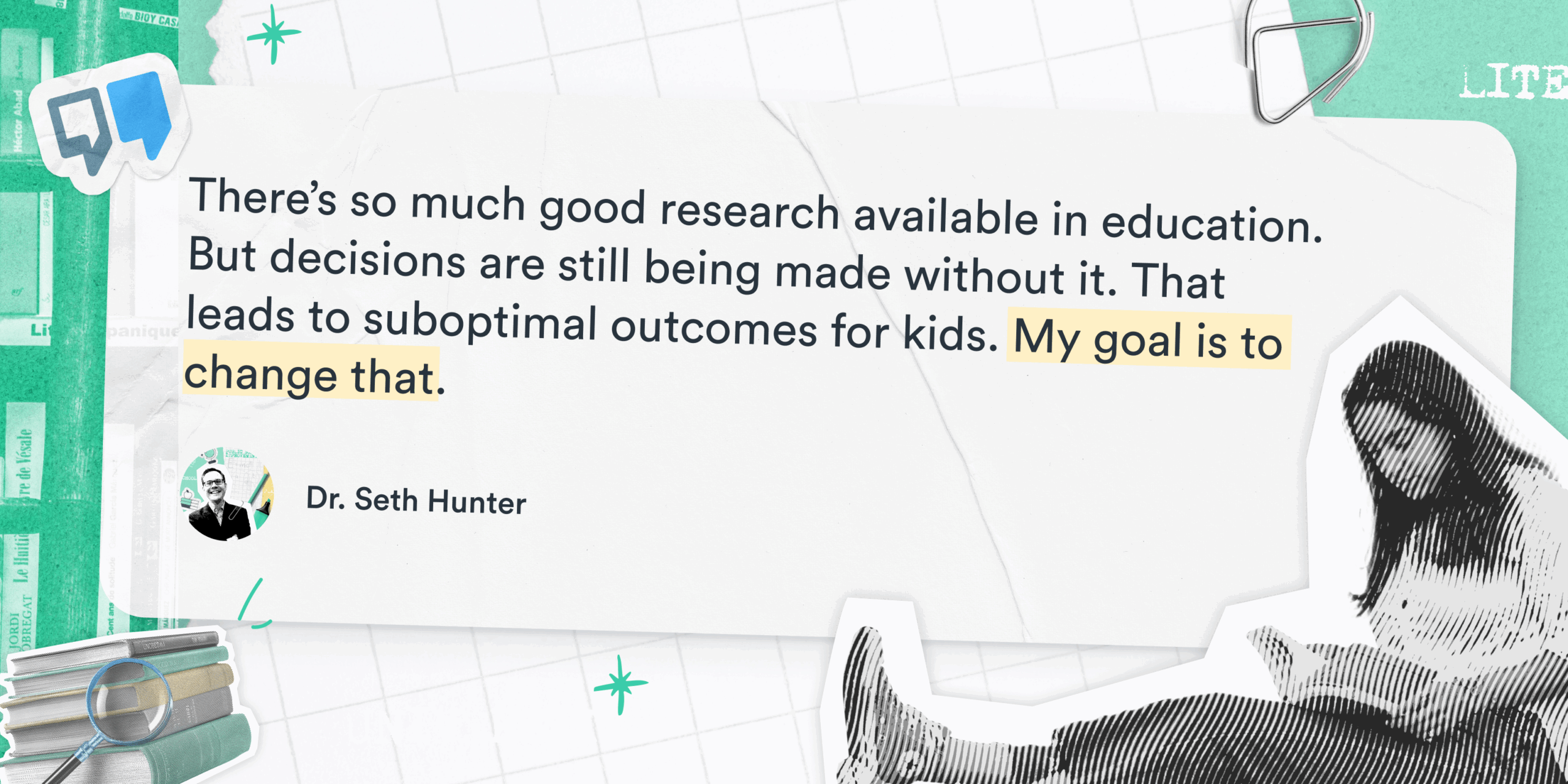
Quote card featuring Dr. Seth Hunter

These findings suggest that AI-enabled tools like Consensus could meaningfully shrink the gap between technical academic research and K-12 research use. Hunter envisions the potential extending far beyond compliance: math coaches could have rigorous research “in their back pocket” to help teachers improve vocabulary instruction for specific student populations, or principals could quickly find evidence-based strategies for emerging challenges.

Scaling to Schools

Hunter is careful to note the study’s limitations. It was a classroom pilot based on self-reports, not causal evidence of impact on actual plan quality or student outcomes. Still, the early signals are promising. His team is now partnering with the Virginia Department of Education to test the workflow with practicing principals and district leaders. They plan to use large language models to systematically analyze school improvement plans statewide. The goal is to compare the quality and relevance of interventions chosen by districts using the AI workflow with those chosen by districts relying on traditional methods. This will provide the first rigorous assessment of whether AI tools can actually improve educational decision-making at scale.

Hunter’s work represents only the beginning of what is possible when AI helps translate rigorous research into practical solutions. As more educators gain access to these tools, evidence-based decision making may finally become the norm rather than the exception in schools. The question is not whether AI can help, but how quickly we can scale these approaches to reach the students who need them most.

If you are using Consensus in education or in another field where research translation matters, we would like to hear from you. Contact us at [email protected] to share how AI-powered research tools are changing the way you work.


Disclaimer: This article describes a classroom pilot led by Dr. Seth Hunter. The views expressed are his own and do not represent George Mason University.
CEHD and University Libraries are building a tool to improve navigating education research


Faculty across the College of Education and Human Development, working with University Libraries, are exploring AI-powered ways to bridge that gap—exemplifying the Initiative’s dual focus on advancing 21st-century education for all and driving responsible digital innovation in service of the public good.

Seth Hunter

Seth Hunter, associate professor of education leadership and policy and senior fellow of EdPolicyForward: George Mason’s Center for Education Policy, collaborated with the University Libraries to receive seed funding from EBSCO—a library database service—to develop a tool that utilizes artificial intelligence (AI) to help practitioners in education find and interpret evidence-based practices and research that can be implemented to improve student outcomes.

Before coming to George Mason, Hunter worked in state and local education agencies, where “research in educational studies in K-12 was available, but not being used to support important decisions at district and state levels. The disconnect between research and practice and policymaking was fascinating to me.”

This wasn’t exclusive to education agencies; the same patterns appeared in local school districts as well. Beth Davis, PhD Education ’23, and postdoctoral fellow in EdPolicyForward, noted that she saw this gap in action.

“When I worked at a high school in Maryland, there were so many challenges that I knew there were better ways to do things than what we were doing, but I also didn’t feel like we had the time to figure out what those things might be,” she said.

Beth Davis

As Davis pointed out, an efficient and effective search takes time, even for the most seasoned researcher. Combing through search results, sorting books from articles from reviews, tracking new keywords and phrases: It can be a challenging, and time-consuming, effort just to find the articles you need. And that doesn’t account for the time required to read and interpret the content once found.

As AI grew in its capabilities, Hunter saw an opportunity to leverage this new technology to perhaps bridge that research/practice gap.

“We’re looking at bespoke AI tools that are out there already to help practitioners find and translate research in ways that would enable school improvement for student benefit while meeting federal and state policy guidelines,” explained Hunter.

Early results show promise. In a pilot endeavor within the Education Leadership MEd program, the students asked to search for articles using AI-powered tools found the process much easier than traditional search methods, and they reported that the AI helped them understand the research through its ability to succinctly summarize the contents in more accessible language.

“It could streamline the process of making evidence-based practices and research easier to find and therefore implement,” said Davis.

Christopher Lowder

As the primary provider for access to scholarly research, University Libraries is central to this project. Hunter recruited the expertise of Christopher Lowder, education subject librarian, to assist them in developing the tool.

“Having computers go through information quickly is not new,” said Lowder, “but now we’re thinking about how this new generation of AI can make the research content understandable to the average user. It’s almost like translation, or decoding.” For example: Can the AI alert the user if the study meets the standards set forth by federal and state Departments of Education?

For Hunter, bringing the public back to university libraries is a secondary benefit of the project. “I think university library systems are such a huge value-add for the public good,” said Hunter. “Libraries set universities apart from many other knowledge organizations.”

Hunter also notes that a tool like this supports fiscal responsibility. With evidence-based practices, leadership can be confident they are putting resources behind an initiative that has been empirically tested and verified. “We want to enable better decision-making so leaders can be better stewards of public resources that can improve students’ lives.”

As one of the top 20 universities for innovation in the United States and a leader in AI innovation in Virginia, George Mason is working to advance research for the campus community and beyond. Multidisciplinary teams like this are, for Hunter, a core tenet of this, and necessary to the development of bold solutions to the grand challenges of our generation.

“We have these permeable boundaries within units and across colleges,” said Hunter. “I mean, this team illustrates that: We have CEHD faculty, we have a librarian, we’ll be working with computer scientists…we are encouraged to engage in transdisciplinary research and that feeds innovation.”

Lowder agreed. “George Mason encourages us to try things in new and different ways and to include different voices within the conversation, and our leadership genuinely believes that our work can do good not just for the university but also for the wider community. I believe it’s a public good for information to be findable, understandable, and accessible.”
Originally posted on August 28, 2025Sarah Holland on https://www.gmu.edu/news/2025-08/cehd-and-university-libraries-are-building-tool-improve-navigating-education-research.

AI Use in Education Convening, January 31, 2025


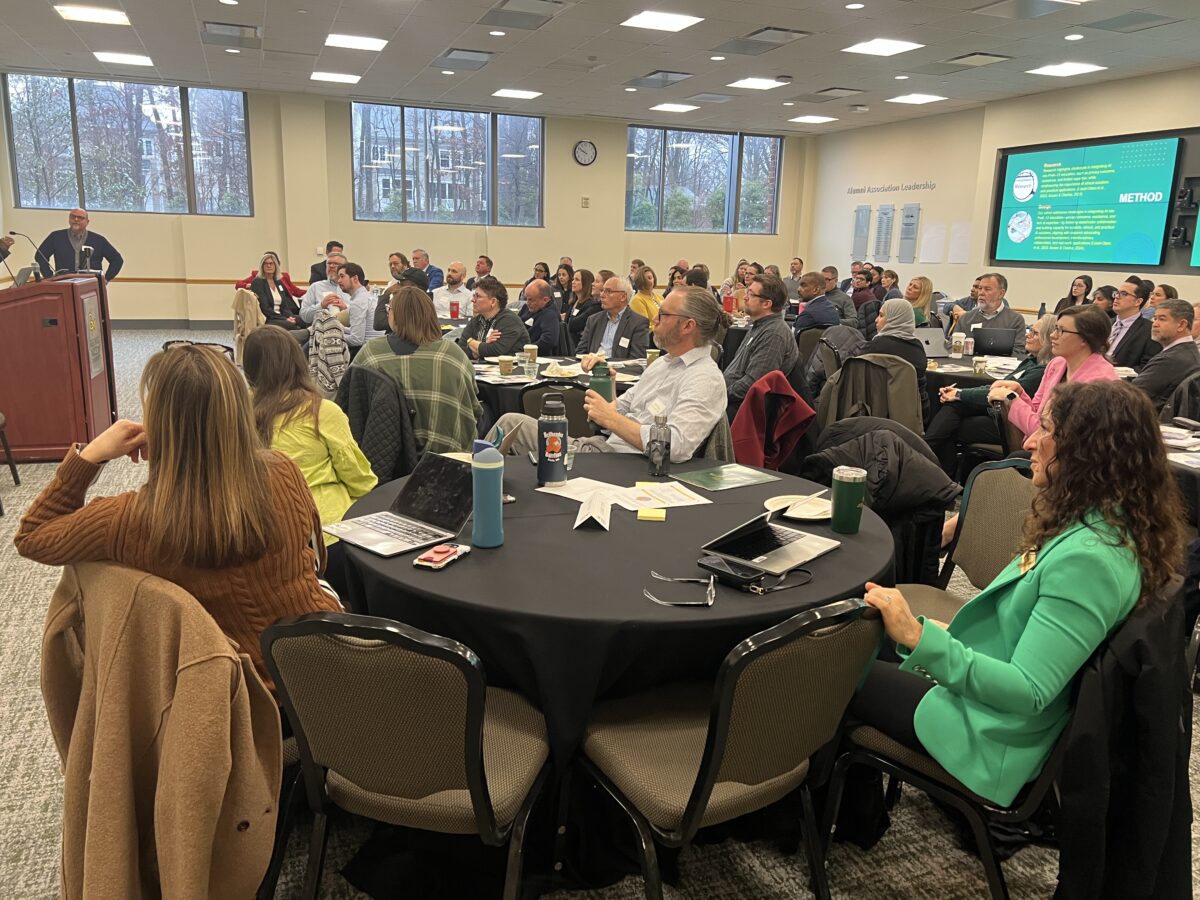
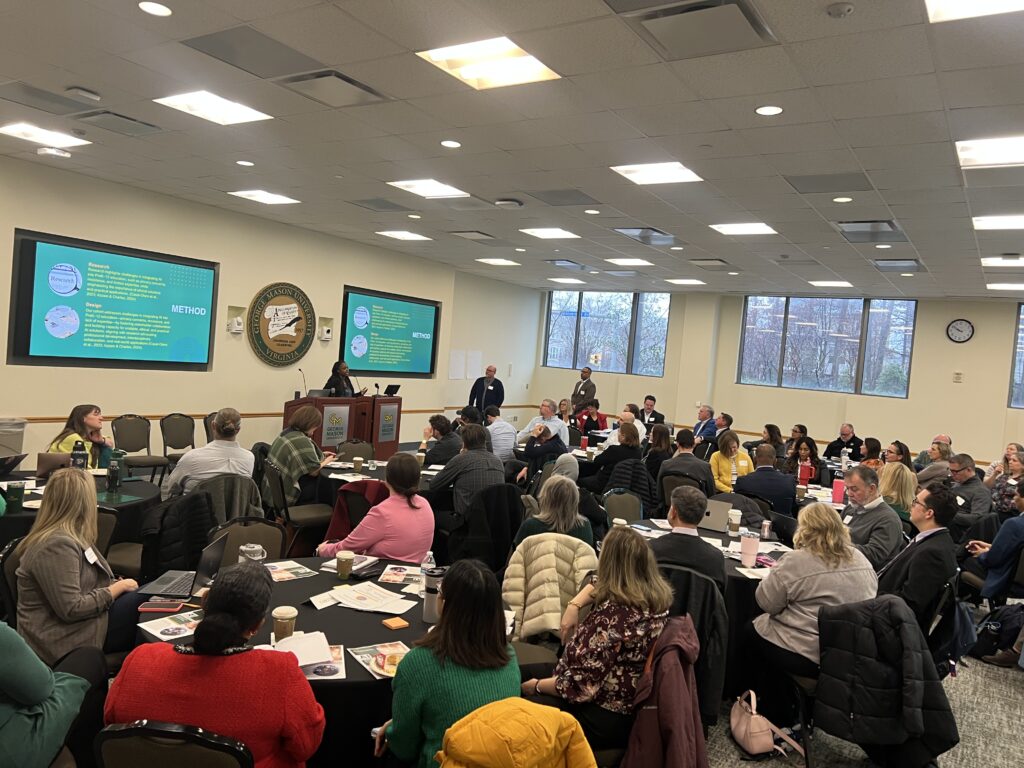
On January 31, 2025, George Mason University’s AI for Education Policy (AIEP) team partnered with the Educational Research Alliance of Northern Virginia at George Mason (ERA-NOVA) and hosted a convening that focused on AI use in K-12 schools at George Mason’s Fairfax Campus, Merten Hall.  

At AIEP, we’re dedicated to leveraging the power of artificial intelligence (AI)advanced data analytics, and transdisciplinary research to drive positive change in education policy. As a collaboration between EdPolicyForward in the College of Education and Human Development and the Center for Advancing Human Machine Partnership (CAHMP), we’re at the forefront of bridging the gap between research and practice in education policymaking.

ERA-NOVA is an innovative partnership between the George Mason University College of Education and Human Development (CEHD) researchers and K-12 school districts and stakeholders in Northern Virginia (NOVA) to collaboratively address the pressing educational challenges in the region. By uniting diverse voices and shared commitment to academic success and positive impact on quality of life, the collaborative aims to drive systemic change across the region. 

ERA-NOVA hosts quarterly meetings with its division partners to discuss relevant topics in education that emerge as key interests and learning opportunities. The January 31st meeting focused on AI use in education. Over 100 participants, including representatives from nine local school divisions, school leaders, and George Mason faculty attended this event.   

CEHD Dean, Dr. Ingrid Guerra-López, Professor Dr. Audra Parker, and Dr. Beth Davis from AIEP opened up and moderated the event, which featured school division representatives sharing their experiences with AI applications and challenges. Participants engaged in table discussions on the implications of AI in their schools and districts, identifying key questions and insights for further exploration. Additionally, Dr. Jered Borup, a faculty member at Mason, demonstrated AI tools designed to enhance learning and instruction. Attendees appreciated the opportunity to exchange knowledge and explore best practices in AI implementation. AIEP is committed to hosting several of these events throughout the year to continue fostering dialogue and collaboration on AI in education.


AI in K-12 Education: What School Divisions Might Consider in Preparing for the Future

[doc id=2713]

AI and Data-Driven Decision-Making for Education Policy and Equity: Convening at George Mason University Highlights Key Insights for School Leaders


Fairfax, VA – George Mason is bridging research and practice on AI for education. On October 8, 2024, leading educators, policymakers, and AI experts gathered at George Mason University for the “AI and Data-Driven Decision-Making for Education Policy and Equity” convening. The event, held at Merten Hall on GMU’s Fairfax campus, focused on the rapidly growing role of AI in education and its potential to reshape school systems, streamline administrative tasks, promote data-driven decision-making, and prepare teachers and students for an AI-enabled learning environments.

At 9am, the fully packed Merten Hall Room 1201 was welcomed by Mason’s professor of education, Anne Holton, who together with Dean of College of Education and Human Development, Ingrid Guerra- López, and Mason’s inaugural Chief AI Officer, Amarda Shehu, opened up the event with inspiring open remarks. The event followed with a wide range of expert presentations and panel discussions. Roberto J. Rodriguez, Assistant Secretary for the Office of Policy Planning and Development at the U.S. Department of Education, provided insights on how federal education policy is responding to the rise of AI. David Myers, Deputy Superintendent and CIO of the Virginia Department of Education, shared their perspectives on how AI can be responsibly implemented to address specific challenges in education.

Throughout the day, panelists and experts provided key insights for school and district leaders, underscoring the importance of thoughtful AI integration. School leaders are increasingly adopting AI tools to reduce administrative burdens and enhance classroom efficiency. However, speakers cautioned that the implementation of these tools must prioritize student privacy and compliance with existing data governance policies, such as FERPA. Districts were encouraged to evaluate their current data infrastructure, ensure that AI tools are compatible with privacy regulations, and carefully pilot these technologies before implementing them on a larger scale.

The event also highlighted the importance of providing teachers with professional development to navigate the integration of AI in their work. This includes training on the safety and privacy aspects of AI tools, particularly when compared to widely available, free alternatives, and on how AI can be used to enhance teaching and learning. GMU faculty showcased promising research on the ways AI can enrich classrooms, such as generating differentiated learning materials and serving as virtual collaborators for students in subjects like mathematics. Still, attendees were reminded that while AI offers exciting opportunities, its integration must be done thoughtfully to avoid unintended consequences, particularly with regard to data privacy and educational equity.

One of the key concerns discussed was the potential for AI algorithms to perpetuate societal biases present in the data they are trained on. Several experts stressed that AI literacy curricula must address these limitations, ensuring that both students and teachers are aware of the challenges associated with AI-generated materials, including biased content and harmful stereotypes. This is a crucial aspect of preparing students to critically engage with AI, rather than accepting its outputs at face value.

Participants explored case studies where AI is already being used to solve problems in school systems, such as improving transportation logistics and enhancing lesson planning. The event concluded with a discussion on fostering collaboration between school districts and researchers, encouraging knowledge sharing and the development of AI strategies that can be scaled across different educational contexts. As a result of this convening, a community of practice will carry out the much-needed ongoing conversations.

The convening, organized by the AI and Data-Informed Education Policy Initiative (AIEP) at George Mason University, exemplified the university’s commitment to transdisciplinary collaboration and evidence-based policy development. AIEP, in partnership with EdPolicyForward and the Center for Advancing Human-Machine Partnership (CAHMP), leverages AI and advanced data analytics to address pressing challenges in education policy and equity.

Upcoming Convening on AI and Data-Driven Decision-Making for Education Policy and Equity

Date and Time: October 8, 2024, Tuesday, 9am – 3:30pm

Location: Merten Hall 1201, George Mason University Fairfax Campus, 4441 George Mason Blvd, Fairfax, VA 22030.

Visitor Parking: Rappahannock Parking Deck, 4395 University Dr, Fairfax, VA 22030 (Hourly rate applies. Parking tickets can be purchased at the pay stations or via the ParkMobile app.)

RSVP is Required. Please register HERE.

The AI and Data-Informed Education Policy Initiative (AIEP) at George Mason University invites you to an exclusive in-person event to learn and exchange information on how recent developments in AI might impact education policy decision-making. 

What to Expect:

  • Expert Presentations: Gain insights from leading experts in education policy, AI, and data analytics, with a focus on how these innovations can be applied in local school settings.
  • Panel Discussions: Join interactive sessions featuring our core team, local school division and education industry leaders, and members of the Mason research community, discussing practical strategies for translating research into actionable policy.
  • Perspectives on Government Policies: Hear from experts of local, state, and federal government education policies. They will share their experiences and perspectives on how AI and data-driven approaches can inform and shape education policy at all levels.
  • Peer Information-Sharing and Networking: Connect with fellow schools and divisions, education policy practitioners, researchers, and policymakers who are equally dedicated to transforming education through evidence-based policy and practice.

Featured Speakers:

Roberto-J-RodriguezRoberto Rodriguez
Assistant Secretary for the Office of Policy Planning and Development,
U.S. Department of Education
David MyersDavid Myers
Deputy Superintendent and Chief Information Officer,
VA Department of Education
Amarda Shehu
Inaugural Chief AI Officer, GMU
Ingrid Guerra-LópezIngrid Guerra-López
Dean, College of Education and Human Development, GMU
Anne HoltonAnne Holton
Professor, Education Policy, GMU
Thema Monroe-White
Associate Professor of Artificial Intelligence and Innovation Policy, GMU
Jacob BoulaJacob Boula
Executive Director of PK-12 Curriculum & Instruction,
Winchester Public Schools
Jim SieglJim Siegl
Senior Technologist for Youth & Education Privacy,
Future of Privacy Forum

Event Agenda

Time Event Speakers
9:00am Check-in
9:10am – 9:30am Opening Remarks Anne Holton – Professor, Education Policy, GMU
Ingrid Guerra-Lopez – Dean, College of Education and Human Development, GMU
Amarda Shehu – Inaugural Chief AI Officer, GMU
9:30am – 10:15am Panel: Policies for AI Use in Education: Federal, State, and Local Moderator: Anne Holton
Roberto Rodriguez – Assistant Secretary, Office of Policy, Planning and Development
Dr. David Myers – Deputy Superintendent and CIO, Virginia Department of Education
Dr. Jacob Boula – Executive Director of PK-12 Curriculum & Instruction, Winchester Public Schools
Jim Siegl – Senior Technologist for Youth & Education Privacy, Future of Privacy Forum
10:15am Coffee Break
10:25am – 11:10am Panel: AI for Education Use Cases: Bridging research to practice Moderator: Peng Warweg
Sanmay Das – Professor, Computer Science, GMU
Antonis Anastasopoulos – Assistant Professor, Computer Science, GMU
Anya Evmenova – Professor, Education, GMU
Craig Yu – Associate Professor, Computer Science, GMU
Ziyu Yao – Assistant Professor, Computer Science, GMU
Jennifer Suh – Professor, Education, GMU
11:10am – 12:00pm AI-Enabled Tools for Practice & Research in Education Seth Hunter – Associate Professor, Education Leadership, GMU
Beth Davis – Postdoctoral Fellow, EdPolicyForward, GMU
Nabit Bakr Bajwa – Graduate Research Assistant, Computer Science, GMU
12:00pm Lunch
12:30pm – 1:00pm Panel: Responsible AI for Education Moderator: Sanmay Das
Thema Monroe-White – Associate Professor, AI and Innovation Policy, GMU
Jered Borup – Associate Professor, Learning Tech, GMU
Ziwei Zhu – Assistant Professor, Computer Science, GMU
1:00pm – 1:45pm Division Information Sharing: Artificial Intelligence for Responsive, Inclusive School Enhancement (ARISE) Moderator: Seth Hunter
1:45pm – 2:30pm Division Information Sharing: Strategies for AI Implementation Moderator: Beth Davis
Gautam Sethi – Chief Information Technology Officer, Fairfax County Public Schools
Aaron Smith – Chief Technology Officer, Loudoun County Public Schools
Matt Caratachea – Director of Instructional Innovation, Goochland County Public Schools
Ed Stephenson – Director of Instruction, Manassas City Public Schools
2:30pm – 3:30pm Network and additional Q&A


Click here to access the event presentation slide deck.

Suggested learning resources for this event.

Join the ARISE (AI for Responsive, Inclusive School Enhancement) Community or Practice to engage with and learn from each other. Our next event is in December. Please stay tuned for more information on that.


This conference is made possible by a grant from the Hewlett Foundation. 

About AIEP: AIEP is a collaboration between EdPolicyForward in the College of Education and Human Development and the Center for Advancing Human-Machine Partnership (CAHMP) at George Mason University. At AIEP, we are committed to partnering with local schools and divisions while leveraging the power of artificial intelligence (AI), advanced data analytics, and transdisciplinary research to address the most pressing challenges in education policy and equity.  

AIEP Team:

Sanmay Das
Professor, Computer Science, GMU
Anne HoltonAnne Holton
Professor, Education Policy, GMU
Seth Hunter
Associate Professor, Education Leadership, GMU
David Houston
Assistant Professor, Education Policy, GMU
Peng Warweg
Assistant Director, CAHMP, GMU
Beth Davis
Postdoctoral Fellow, Education Policy, GMU
Nabit Bakr Bajwa
Doctoral Research Assistant,Computer Science, GMU

New Pilot Study on Specialized AI Assistant Tools to Enhance Research-Based School Improvements


K-12 education has entered a new frontier where educators are exploring the power of artificial intelligence (AI) in innovative ways to enhance student outcomes. While many human-AI collaborations focus on efficiency, some venture into uncharted territory, exploring qualitatively new and improved decision-making. Dr. Seth B. Hunter, Assistant Professor of Education Leadership and Senior Fellow of EdPolicyForward, the Center for Education Policy at George Mason, has embarked on one such venture by exploring how AI can assist aspiring and current educational leaders in making better school improvement decisions based on current, rigorous, and technical education research.

School leaders nationwide regularly engage in school improvement planning, setting performance goals and designing action plans to achieve them. While the degree to which school leaders explicitly base their plans on rigorous research may vary, it is crucial for all school leaders to consult relevant research to design the most effective plans. K12 educators do use research for decision-making and practice; however, they often overlook rigorous, technical research written for academic audiences, which could provide the best recommendations for school improvement.

Dr. Hunter is exploring novel ways to bridge the gap between technical academic research and its use for school improvement via AI-enabled tools. These tools focus on finding the most rigorous academic research and translating it for lay audiences. In a recent pilot study, Dr. Hunter randomly assigned these tools to a Northern Virginia cohort of aspiring principals enrolled in Mason’s Education Leadership MEd program; the control group was in the same program, but it found and made sense of research using traditional means. The MEd students reported that using the specialized AI tools was significantly easier than using conventional means; those using AI-enabled tools were also much more likely to reportthat finding and making sense of research would be helpful in their jobs as future leaders. These pilot study results suggest that AI-enabled tools can shrink the gap between rigorous and technical academic research and K12 research use.

In future work, Dr. Hunter will scale up this intervention with current principals and central office administrators, explore how AI tools use changes to school and district improvement plans, and see if those changes affect student outcomes.

Podcast: LLMs, Learning, and the Law: Navigating the Opportunities and Challenges of AI in Education

A Policy Brief on Best Practices to Increase Student Attendance

[doc id=2598]

Expert Panel Addresses Chronic Absenteeism in Local Schools: A Collaborative Approach to Tackling Attendance Challenges


On January 24th, a dynamic researcher-practitioner panel convened with local school leaders to delve into the pressing issue of chronic absenteeism. The panel provided a unique platform for collective knowledge sharing and learning, fostering collaboration among education stakeholders in the ongoing battle against absenteeism.

Moderated by Mason’s professor of education, Anne Holton, the panel witnessed insightful discussions and presentations aimed at understanding the root causes of absenteeism and exploring effective solutions.

Dr. Seth Hunter and doctoral student, Alyssa Barone, presented the latest research findings on attendance causes and solutions. The presentation, characterized by its rigor and up-to-date insights, shed light on the multifaceted nature of absenteeism and highlighted evidence-based strategies for improvement. In the aftermath of the enlightening session, two local school divisions reached out to Dr. Hunter expressing interest in collaborating on student attendance research tailored to their unique contexts. These collaborations are poised to delve deeper into the specific challenges faced by each division and identify context-specific solutions to enhance student attendance rates.

The event underscored the importance of collaborative efforts in addressing chronic absenteeism and showcased the power of research-practice partnerships in driving meaningful change in education.